
Tulip Central
Welcome to the wonderful world of tulips
For years I pigeon-holed tulips as boring, petrol-station blooms that drooped in the vase after a couple of days. But when I dug a bit deeper and did some online research, I was taken aback by the sheer volume of voluptuous tulip bulbs available. So I ordered a few as an experiment. They arrived dumpy and brown in their papery skins. Unremarkable and unlovely. But oh, they carried the promise of such transformation. Come Spring, the Belicia shook out her frills of vanilla silk, edges stained with raspberry ink. Light shone from the scarlet candles of the Armani. And the sepia-luxe of La Belle Epoque bustled beside the raven drama of Queen of Night.
Since then, I have made it a ritual of autumn to go online and select a haul of amazing tulips. It’s so cheering to choose these treasures when the weather is turning dreary and there are so many varieties, from those shaped like the feathers of exotic birds (the parrot tulips) to those that resemble peonies (the double tulips). And the range of colours is something to behold. Whatever your favourite shades are, there will be a tulip to match.
Tulips put on a show from late March to May and I have always found in my garden they do best in pots. It’s great to be able to group the containers creatively as the flowers bloom and replace them as they fade. While you can re-bloom certain types of tulips in subsequent years in flower beds (and I would do that if I had large flower borders or wilder grassy areas to plant them in) for my front garden, I view them as an annual treat. And if you want a reliable, resplendent display, then ordering new tulips each season is the way to go.
NB: All parts of the tulip, from bulb and stem to leaf and flower, are toxic to cats and dogs, so plant with diligence.

How to plant tulips
- The ideal time for planting tulips is from October to December. Choose pots and containers with good drainage - tulips hate to be too wet and if they get waterlogged, they’ll rot. I like to mix a couple of handfuls of horticultural grit per pot into a peat-free, multipurpose compost to improve drainage.
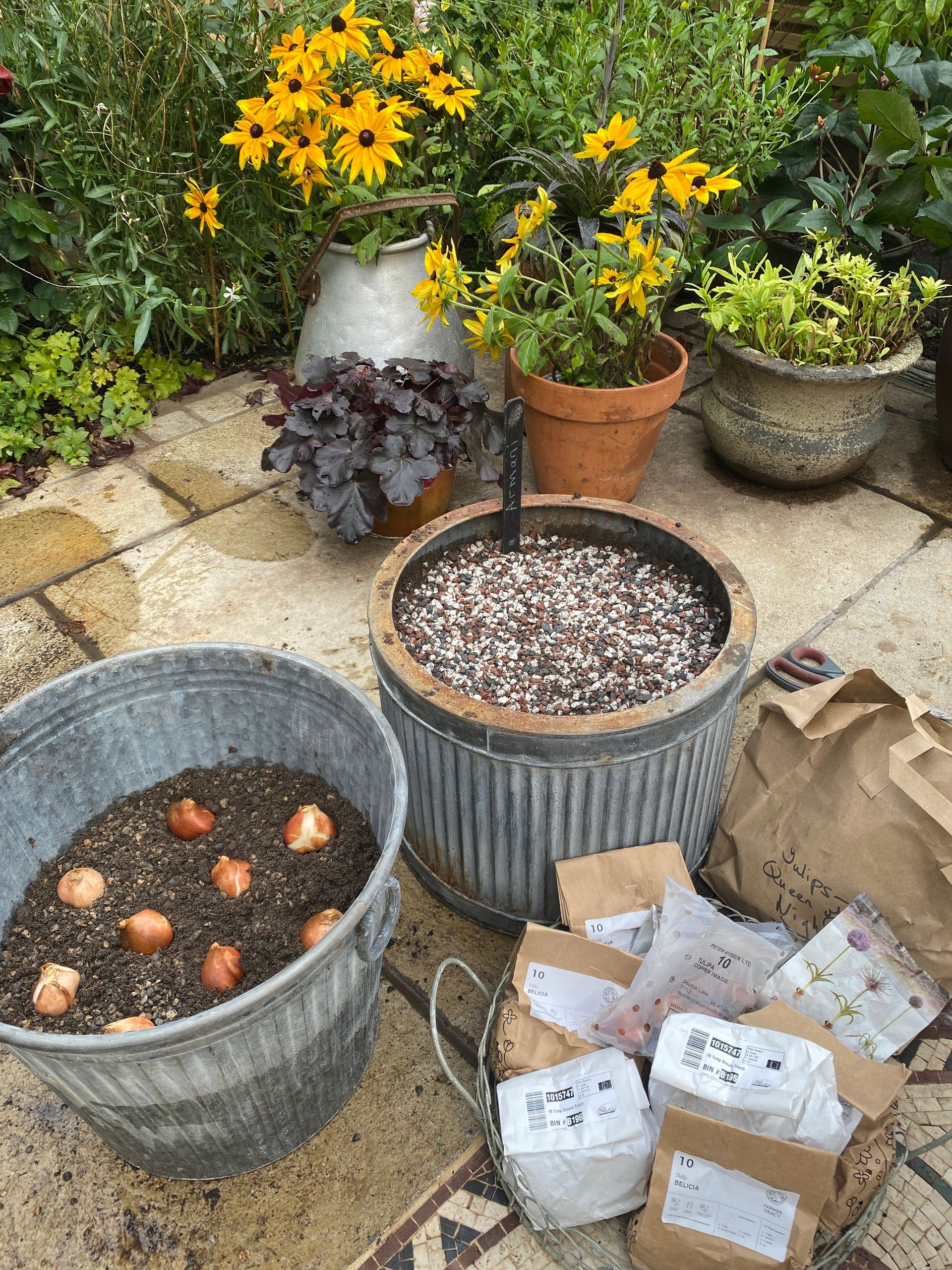
- Start to fill the pot with the compost, leaving enough space to place the bulbs at a depth of approximately three times their height. Place them point side up, a few centimetres apart (in a pot, you can go slightly closer than shown in this picture if you want to ensure a lush display). Cover the bulbs with the remaining compost mix, leaving about an inch of the rim and firm the soil. I like to scatter some grit on the top – the pots look more stylish and it helps with drainage.
- Label them - if you have more than one or two pots, come spring, you really won’t remember which bulbs went in which pots. I use black plant labels and write on them with a white marker because I just think they look smart but any plant labels will do.
- Finally, protect them from squirrels and foxes. I have lots of old wire cloches but they can be expensive to buy these days, so you can always buy some mesh and secure it with metal pegs. Once the tulips have started sprouting and are pushing through, remove and let your tulips grow freely.
- Water well and place in a relatively sheltered spot but don’t worry when winter temperatures drop and the garden is shivering in freezing conditions. Tulip bulbs bloom much better when they have been through a period of chilling. Come spring, move pots to their final position.
Ready for my close-ups?
Some of my favourite tulips I’ve grown and photographed.